This research examines whether manufactured expertise can fool AI search engines, using the MyJobQuote scandal where 11 fictional "experts" were quoted across 600+ UK media articles as a test case. When we queried nine AI models with topic-based questions like "Who are the UK's leading experts on home security?", zero fake personas appeared. But when asked directly whether specific fake names were recognised authorities, models failed 29.5% of the time, sometimes confidently inventing career histories for people who don't exist. The contrast with genuine experts is stark. Real authorities in SEO like Jason Barnard dominate AI recommendations because they've built deep, corroborated brand entities; consistent profiles, third-party validation, years of published work. The takeaway for SEOs and marketers: AI doesn't rank pages anymore, it recommends entities. You can trick a model into recognising a name, but you can't trick it into recommending that name ahead of genuine authorities. Brand building isn't optional - it's your moat.
Influencer Discovery
Discover the lead writers, authors and influencers in your industry and easily integrate your SEO and content marketing efforts with your PR and outreach strategies
>30 Million influencers in 40 countries
Entity Search uncovers the people behind the content that ranks well so that you can build relationships with them.

Find the People that matter most to Google and you
Connect with key influencers, the super-spreaders that can supercharge the reach of your content amongst relevant potential customers.

FAQs about discovering influencers?
Want to know how to find and build relationships with influencers in your niche?
What is an influencer?
People mean different things when they talk about Influencers. We are focused on helping you discover and build relationships with people that are writing for websites in your niche. We believe by doing this you can find new partners, new writers for your blog, new speakers for your webinars and of course, new potential fans, affiliates and advocates for your products and brand.
We use our proprietary SERP data containing billions of website pages and keywords to find writers on almost any topic. We then narrow this down even further using your monitored keywords, to find people with a deep interest in your niche.
These writes can help you drive organic traffic as they can generate real organic traffic from real buyers. Clearly the topical relevance and authority of these authors will go a long way in improving your organic rankings.
How do I get editorial links?
Well, contacting writers for a publication is a very good way to get links. Especially, if you can lead with a relevant angle having looked at their previous articles and keywords/topics they write about.
This is a classic digital PR strategy and is covered in our expert guide.
How does Authoritas discover influencers?
Every month we make hundreds of millions of SERP requests across 40 major markets. When we find influencers ranking, we annotate our database and link the related data together in a graph database so the relationships are easy to explore.
We then supplement this by looking for named contacts on the key pages that are ranking for your monitored keywords in your project. This gives us breadth and depth of contacts to go after in almost every conceivable niche.
Does this help me find influencers on YouTube, Instagram or TikTok?
Not today. But if this is something that interests you then please do let us know.
Discover for yourself why we're different to other SEO tools
If everyone else is using famous SEO brands such as SEMrush, Ahrefs or Moz then how are you going to gain a competitive advantage?
Featured Posts from our blog
Expert content from our team and our friends. Read our original SEO research studies, news about our software, algorithm updates, SEO advice and opinion.
Introducing our new free tool to convert exported Google Search Console keyword data into AI-ready question prompts, going beyond the traditional regex approach of filtering for "how", "what", "why" queries. The tool analyses up to 1,000 GSC queries, automatically generates natural language prompts, and supports multilingual output with English translation options - making it particularly useful for international SEO teams. The core argument is that since no AI platform currently releases reliable first-party prompt volume data, starting with keywords where you already have proven Google performance (impressions and clicks) provides a more meaningful baseline for AI search optimisation than guessing at prompt demand.

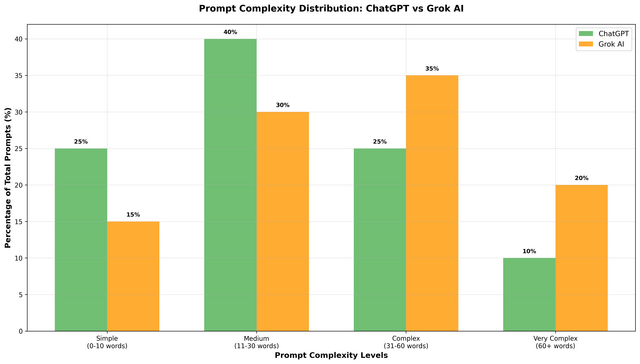
Analysis of 1.5 million ChatGPT conversations and 10,000 Grok AI interactions reveals a fundamental shift in how people use AI, from simple search-style queries to complex, conversational interactions, with ChatGPT usage flipping from 47% work-related to 70% personal use since launch. The research shows distinct platform personalities emerging: ChatGPT users favour direct, task-oriented prompts (65% simple to medium complexity) for practical advice and writing help, while Grok users engage in longer, exploratory discussions (55% complex prompts, 83.8% open-ended questions). Crucially for SEOs, this data demonstrates that optimising for AI visibility now requires moving beyond keyword-based strategies to conversation-based optimisation that supports natural language queries averaging 30+ words.